Not all bad press is good press - Time to go talc-free for pitch control
What Does It Matter For Paper Makers?
Historically, both inorganic adsorbents such as talc and organic dispersants have been used for pitch prevention. These treatment programs work efficiently to reduce high levels of pulp contamination, which would otherwise result in a decrease in sales prices, reprocessing costs, and, ultimately, customer complaints.
As long as people have been making paper from trees, pulp manufacturers have struggled to eliminate pitch. Pitch is a complex organic colloidal contamination released during the pulp production process and can contain resin acids, fatty acids, triglyceride fats, steryl esters, sitosterols and other unsaponifiable materials. Pitch can vary in amount, tackiness, and composition, and poses a major challenge for pulp manufacturers, as it can agglomerate and its sticky nature causes production and quality issues.
Enters A New Talc-Free Alternative
Fortunately, Archroma’s R&D team made a breakthrough when they found an alternative to the use of talc for pitch prevention. The recently launched Cartaspers® PLH liquid is a novel treatment that offers many benefits talc cannot. It is very effective in attracting non-polar (hydrophobic) substances, such as natural pitch and stickies, and helps to passivate contamination as well as prevent agglomeration and deposition. Cartaspers® PLH liquid makes use of a new mechanism that has no impact on cellulosic material, and as it is a liquid solution, it is much easier to handle than powder-like talc. It performs well across all water hardness levels, including soft water, and complies with both BfR and FDA food contact regulations. Furthermore, it leads to a significant reduction in downtime, which can enable higher yields with a reduced need for cleaning agents.
Stay away from bad publicity – Choose a talc-free alternative for pitch control.
More News & Stories

What Goes Into The Box - Chemistry's Fundamental Role in Sustainable Packaging
Without chemistry we wouldn’t have packaging at all — sustainable or otherwise. Yet, the role of chemistry in packaging is often unacknowledged, even by seasoned packaging professionals. This article explores the role of chemistry, both as an integral part of every package, and as the driving force behind true circularity in this sector.

Denim collection coloured with wool waste
We spoke with World Textile Information Network (WTiN) on our collaboration with Orta Anadolu, who launched a denim collection at Kingpins Amsterdam using Archroma's FiberColors®. Hear from Archroma as we share with WTiN's editor about how we brought FiberColors® from concept to commercialization.
Circularity — The Key to More Sustainable Packaging
Waste is a human creation, often a by-product of our focus on short-term benefits in the shape of the Take/Make/Consume/Dispose ‘linear’ economy. Left to itself, Earth happily runs on completely renewable energy. There’s no waste in a rainforest, for example. It’s a naturally circular ecosystem — resources are constantly recycled and reused, outputs from one process are the inputs for another.
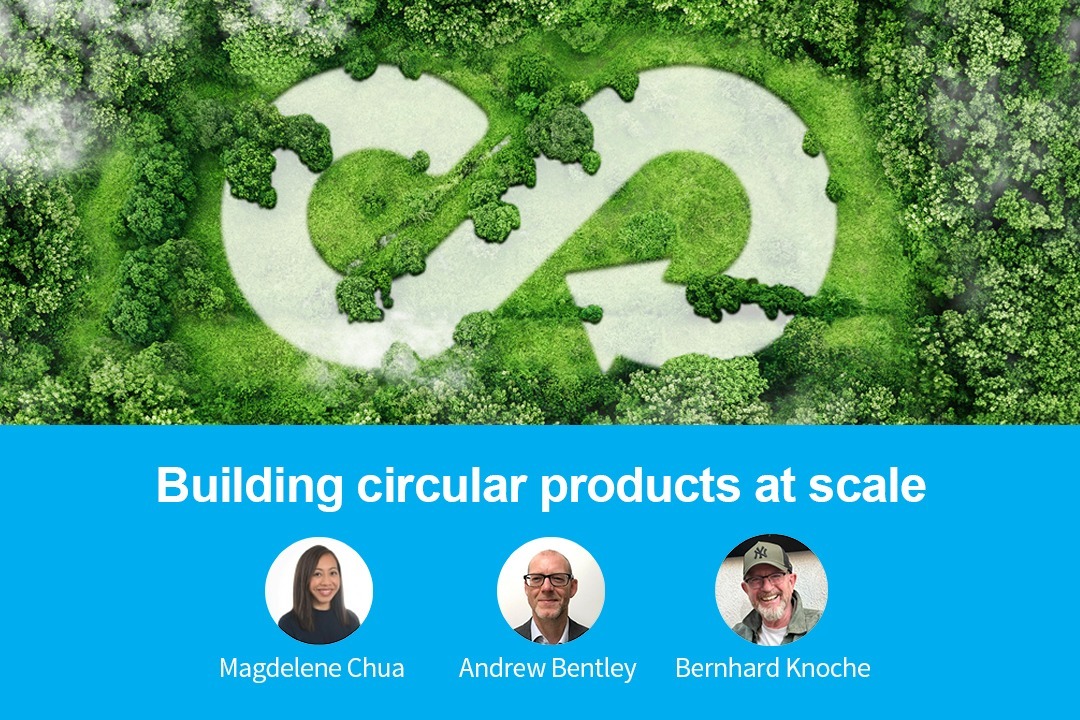
Building Circular Products at Scale
What's the path to certification? What is safe chemistry all about? How can these help customers advance their sustainability goals? Archroma colleagues Andrew Bentley and Bernard Knoche share their thoughts on these questions.